SOUTH KOREA — Land of Fun, Food and Lots of Shopping!

South Korea is so much more than K-dramas and K-beauty!
Seoul, one of the most underrated cities in my opinion, is actually one of the most vibrant capitals in the world. With its dazzling lights, delicious food, bustling markets, fabulous shopping and endless things to do, the city has something for everyone.
Many travelers tend to gravitate towards Europe and the Americas, sometimes overlooking this fascinating destination in East Asia. But personally, I found Seoul every bit as exciting as—and in some ways even more enjoyable than—many of the more popular tourist destinations.
If you love exploring cities that combine modern living with traditional culture, amazing food and plenty of shopping, South Korea deserves a place on your travel list.
When to Visit

Autumn and Spring are one of the best times to visit Seoul. The weather is generally pleasant, neither too hot nor too cold, making it ideal for sightseeing and exploring the city on foot.
The beautiful autumn colours, crisp air and seasonal festivities add to the charm. September to November is generally a lovely period to plan your trip, although temperatures can drop considerably towards late November.
Visa
Indian passport holders generally need to obtain a visa before travelling to South Korea for tourism.
You can apply through the relevant South Korean visa application process in India. Allow sufficient time for the application, as processing times can vary depending on the season and individual circumstances. It is minimum 15 working days to process the visa. One may get it fast tracked by paying extra.
Airport Transfers
Incheon International Airport is well connected to Seoul, and there are several convenient ways to reach the city.
Airport limousine buses are a comfortable option, particularly if you are travelling with luggage. They serve various neighborhoods and hotel districts, including Myeongdong and other central areas. Tickets can be purchased at designated airport counters or machines, depending on the service. The buses run every 10-12 minutes. One way ticket to Myeongdong costs1700 wons.
These buses are often more convenient than taking the train if your hotel is near one of their stops. However, journey times depend on traffic and the destination.
Another option is the AREX airport railway, which connects Incheon Airport with Seoul. The express service runs to Seoul Station, while the all-stop service makes additional stops along the way.
From Seoul Station, you can connect to the subway or take a taxi to your hotel.
One useful tip: you do not necessarily need to exchange a large amount of cash at the airport. Compare your payment options and exchange rates, and keep some Korean won handy for small purchases or transport where needed.
Where to Stay

For first-time visitors, I would recommend Myeongdong as one of the most convenient areas to stay in Seoul.
It is lively, centrally located and packed with shopping streets, Korean street food stalls, cafés and beauty stores. In the evenings, the neighborhood comes alive with food vendors, shoppers and visitors exploring its bustling streets.
There are plenty of hotels to suit different budgets, from comfortable mid-range properties to more upscale options. Hotels in particularly convenient locations can be more expensive, but I think the easy access to shopping, food and public transport makes Myeongdong an excellent base for exploring Seoul.
You can certainly find cheaper accommodation elsewhere, but for a first visit, I would prioritize location and convenience.
How to Move Around Seoul
Seoul has an excellent public transportation network, so there is usually no need to rely on expensive taxis for every journey.
The subway is extensive, buses are frequent on many routes, and both are convenient ways to explore the city.
The T-money Card
A T-money transport card is useful for travelling on public transport. You can generally purchase one at convenience stores such as 7-Eleven, CU etc. and at selected transport-related outlets, then top it up as required. The T money card costs 4000 wons at 7 -11 store and then top is up as per your requirement.
The bus fare is usually 1500 won one way and the subway costs 1550 wons.
You can use it on eligible subway services and buses, and it makes getting around much easier than purchasing a separate ticket for every journey.

Fares vary according to the transport service and journey, so check the latest rates when you arrive. Some transport cards and tourist passes have different conditions, and prices can change.
Tip : You can save 4000wons in case you register yourself at Lotte Department store. They issue free T money card. Please carry your passport which is a must.
Download Naver Map
One of my most useful travel tips is to download Naver Map before you arrive in South Korea.
Google Maps has limitations in South Korea, particularly for driving and detailed walking navigation, so I would not rely on it as your only navigation app.
Naver Map is particularly useful because it can show you:
Which bus to take and where to board.
Which subway line to use.
The direction of travel and the relevant station.
Walking routes and estimated journey times.
Nearby restaurants, shops and other attractions.
Once you get used to the app, navigating Seoul becomes much easier. The public transport system is efficient and well organized, even if the network initially looks a little overwhelming.
My advice is to save your hotel location and the places you want to visit before heading out each day. It will make exploring the city considerably more convenient.
What to Do in Seoul: Food, Culture, Shopping and Beautiful Palaces

Seoul has so much to offer that you can easily spend several days exploring the city without running out of things to do There is something for every traveler.
Here are some of the places I particularly enjoyed and would recommend adding to your Seoul itinerary.
1. Myeongdong — Street Food and Shopping
Myeongdong is one of the liveliest neighborhoods in Seoul and a paradise for anyone who loves shopping, street food and a vibrant atmosphere.


The streets are lined with food kiosks selling everything from corn dogs—with cheese, sausages or both—to seafood, prawns, octopus, fish cakes and dumplings. You will also find marshmallow ice cream, sugar-coated fruits, egg bread and the famous Korean garlic bread.
One thing I noticed was that many of the snacks were much sweeter than I expected! The egg bread has a cake-like sweetness, while some versions of the delicious-looking garlic bread contain sweet cream cheese or a sweetened cream filling. Even some packaged snacks can taste sweeter than their appearance suggests.

Myeongdong is equally wonderful for shopping. There are beauty stores, fashion outlets, souvenir shops and department stores, and the area looks particularly beautiful in the evening when the streets light up with music, colourful displays and bustling food stalls.
A few useful tips for Myeongdong:
Carry some Korean won in cash. Some street-food vendors may not accept cards.
You will find currency-exchange shops in the neighborhood. Compare the rates and fees before exchanging your money.
Keep your passport handy when shopping if you intend to claim a tax refund. Participating stores may offer an immediate refund at checkout or issue documentation for a refund later. Eligibility and procedures vary, so check the requirements before making a purchase.
South Korea's official tourism website explains the difference between duty-free shopping, immediate tax refunds and refunds claimed before departure.
2. Jongno-gu — A Taste of Local Seoul
Jongno-gu is a historic district of Seoul with traditional markets, cultural attractions, restaurants and streets that offer a glimpse of everyday Korean life.

One of the dining experiences worth looking out for is Korean hot pot, particularly restaurants where diners cook their chosen ingredients at the table. Depending on the restaurant, you may find seafood such as fish, prawns and crab, alongside meat, vegetables and a variety of sauces.

It is an enjoyable way to eat, especially when travelling with family or friends, as everyone can gather around the table and share the meal.
If seafood is your preference, look for a restaurant specializing in seafood hot pot rather than assuming that every restaurant in the district serves it. Menus and cooking styles vary from one establishment to another.
3. Gwangjang Market — A Paradise for Food Lovers
Gwangjang Market is one of Seoul's best-known traditional markets and a wonderful place to explore Korean food culture.

The covered market has rows of small stalls where you can watch food being prepared right in front of you. Some of its food vendors have also gained international attention through Netflix's Street Food series.

One of the dishes that caught my attention was the mung bean pancake, known as bindaetteok. The mung beans are ground and cooked on a large griddle until the pancakes develop a crisp exterior. They are often served with pickled accompaniments, making them an interesting option for vegetarians. However, it is worth checking the ingredients, as recipes and cooking methods vary, and some stalls may use meat or animal-based ingredients.

Another popular dish is kalguksu, or hand-cut noodles served in a hot broth. You can also find dumplings, seaweed-topped dishes, seafood and freshly prepared snacks.
The atmosphere is part of the experience. Many stalls have stools arranged around their counters, so you sit close to the cooking and watch the vendors at work. I was amazed by the sheer volume of mung bean pancakes and steamed dumplings being prepared.
My tip: Visit when you are hungry, walk around the market before choosing a stall, and remember that a dish that looks vegetarian may still contain meat or seafood in its broth or seasoning.
4. Insa Dong — Traditional Korean Art and Culture
Insa Dong is one of the best places in Seoul to experience traditional Korean culture.
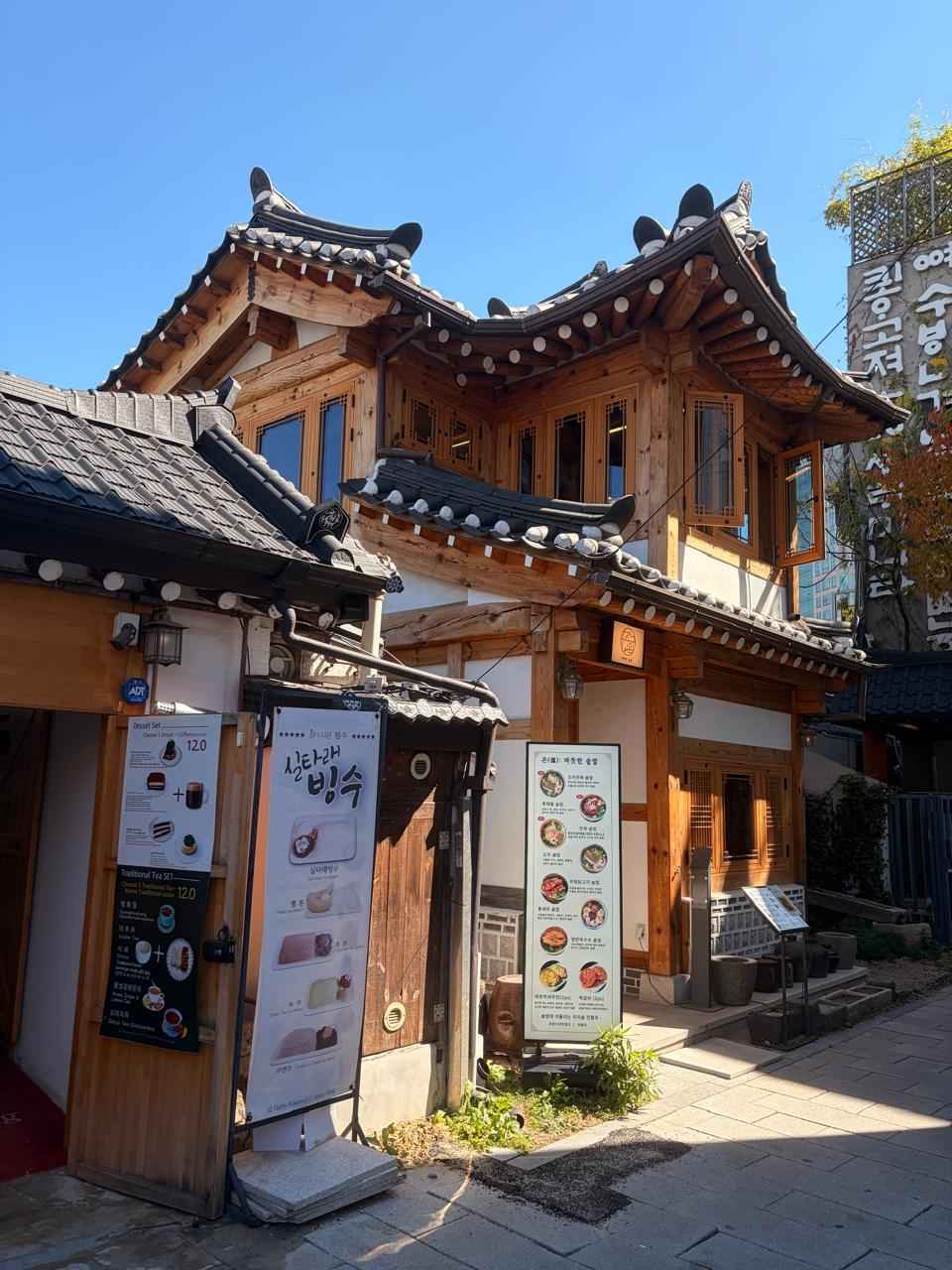
The neighborhood is known for its art galleries, tea houses, craft shops and stores selling traditional souvenirs. You can browse Korean paintings, decorative chopsticks, ceramics, handicrafts and other items that make lovely gifts.
Walking through Insa Dong feels quite different from the modern shopping streets of Myeongdong. There is a stronger emphasis on art, heritage and traditional craftsmanship, and you will also find cafés and tea houses where you can take a break from sightseeing.
If you enjoy browsing independent shops and discovering local crafts, set aside some time to explore the side streets rather than just walking along the main road.
Insa Dong is also conveniently located for visiting Jogyesa Temple, making it easy to combine the two in a single outing.
5. Jogyesa Temple — A Peaceful Buddhist Sanctuary
Jogyesa Temple is an important Buddhist temple located in central Seoul, within walking distance of Insa Dong.

It is well worth including in your itinerary if you are exploring the cultural side of the city. The temple offers a striking contrast to the busy roads and commercial streets surrounding it.
Inside, you can see the impressive Buddha statues and observe people coming to pray. The atmosphere is generally peaceful, and the temple provides an opportunity to learn a little more about Buddhism in Korea.

Visitors can generally enter the temple grounds without paying an admission fee. Donations and optional offerings, however, are separate.
You may see people making offerings or participating in Buddhist rituals. Be respectful of those praying and check the photography rules before taking pictures inside the worship areas.
6. Gyeongbokgung Palace — Step into Korea's Royal Past
Gyeongbokgung Palace is one of Seoul's most famous attractions and, in my opinion, a must-visit for anyone coming to the city for the first time.

The palace was built during the Joseon dynasty and offers a glimpse into Korea's royal history, with grand gates, courtyards, traditional architecture and beautiful mountain scenery in the background.
You can easily spend two to three hours exploring the extensive grounds, taking photographs and appreciating the architecture.
One of the highlights is the royal guard-changing ceremony. It is a colorful and elaborate performance featuring traditional costumes, ceremonial equipment and music. Check the official schedule before your visit, as ceremony times and availability can vary.
Rent a Hanbok for the Experience

One of the most enjoyable things to do around Gyeongbokgung is to rent a traditional Korean outfit called a hanbok.
There are several rental shops in the surrounding area, and some offer packages that include the outfit and optional hairstyling or accessories. Prices vary according to the duration, style and services included.
You will see many visitors dressed in colorful hanboks, posing for photographs against the palace's traditional buildings. It is a lovely way to make your visit more memorable.
An added advantage is that visitors wearing eligible traditional hanbok can receive free palace admission under the applicable rules. Check the current admission policy and hanbok requirements before booking a rental.
The palace is well connected by public transport, and buses and the subway make it relatively easy to reach.
7. Bukchon Hanok Village — Traditional Houses and Charming Lanes
Bukchon Hanok Village is a residential neighborhood famous for its traditional Korean houses, known as hanok.

Located between Gyeongbokgung and Changdeokgung palaces, the area has narrow lanes lined with traditional tiled roofs and beautiful architectural details. Some historic houses now operate as cultural centers, galleries, cafés or guesthouses.
It is a lovely place to walk around and photograph traditional Korean architecture, and there are souvenir shops and cafés in the surrounding streets.
However, one important thing to remember is that Bukchon is a real residential neighbourhood, not simply an open-air tourist attraction. Visitors are asked to keep noise levels down, avoid photographing private spaces and respect the people who live there.
Important visiting-hours update: Tourist access is restricted in the designated Bukchon Special Management Area, with visiting hours generally limited to 10 am–5 pm. The restriction applies to the designated zone. Fines may apply for entering the restricted zone outside permitted hours.
I would combine Bukchon with Gyeongbokgung Palace and Insa Dong, as they are all in the same general area.
8. Banpo Bridge — An Evening by the Han River
The Han River is an important part of Seoul's landscape, and spending an evening beside it is a lovely way to experience a different side of the city.
Banpo Bridge is particularly known for its Moonlight Rainbow Fountain, a water-and-light display that can make the bridge a beautiful sight when the fountain is operating.

The surrounding riverside parks are popular places to relax, enjoy the views and spend time outdoors. Depending on the season and event schedule, you may also find food stalls, picnic areas and organized activities nearby.
The atmosphere can be lively, particularly on pleasant evenings, when people gather by the river to eat and enjoy the city lights.
However, do check the current fountain timetable and any seasonal food-market arrangements before making a special trip. The food stalls and market events do not necessarily operate every weekend or throughout the year, and the fountain may be suspended due to weather or maintenance.
9. Korean Beauty Products — Shopping at Olive Young
South Korea is famous for its beauty and skincare industry, and shopping for Korean cosmetics is almost an attraction in itself.
You will find beauty stores throughout Seoul, selling everything from sunscreens and moisturisers to serums, sheet masks, cleansers and makeup.
One of the best-known retailers is Olive Young, which stocks a wide range of Korean and international beauty brands. Many branches are large, well organised and convenient for browsing products across different price ranges.
Starfield Library and Gangnam Statue
Starfield is an open famous library in Seoul, visisted by thousands. It is in the starfield mall and taking a subway to reach is an easier option.

Starfield Library Gangnam statue is just situated outside the mall and it plays the famous Gangnam style song when one approaches the statue for a photo.
The best part is many people danced and made vidoes on the famous song.

11. N Seoul Tower — Panoramic Views of the City
N Seoul Tower is one of Seoul's most recognisable landmarks. Located on Namsan Mountain, the tower is a popular attraction offering spectacular panoramic views of the city.

The observation deck provides a wonderful opportunity to see Seoul from above, with its sprawling skyline, surrounding mountains and cityscape stretching into the distance.
One of the most charming features of the area is the famous Love Lock Fence, where couples attach padlocks as a symbol of their love. You will find thousands of colorful locks covering the railings, making this a popular spot for photographs.

There are also several viewing areas around the tower where you can enjoy the scenery without necessarily going up to the observation deck. Restaurants and cafés are available, and you can pick up refreshments from convenience stores in the area.
My Tip: Visit Before Sunset!
I would strongly recommend reaching N Seoul Tower before dusk. Watching the city gradually transform as daylight fades and the lights begin to illuminate the skyline is a wonderful experience.
One gets to enjoy two different views of Seoul—the city in daylight and then its sparkling night-time panorama. If the weather is clear, the views can be spectacular.


If you are taking the bus, check the route and drop-off point carefully, as you may need to walk uphill to reach the tower area. The final approach involves some walking, so comfortable shoes are advisable.
The observation deck requires a separate ticket, and admission prices can change. Check the official website for current ticket prices and opening hours before visiting.
My recommendation: Keep at least 1.5–2 hours for the visit, particularly if you want to explore the viewing areas, see the Love Lock Fence and enjoy the sunset.
12. Namdaemun Market — A Traditional Shopper's Paradise
Namdaemun Market is one of South Korea's best-known traditional markets and a wonderful place to explore if you enjoy shopping for local products, souvenirs and everyday Korean goods.
You can find an enormous variety of merchandise, including clothes, bags, accessories, kitchenware, traditional items, souvenirs and much more.
What makes Namdaemun interesting is the sheer variety of things available in one place. It offers a very different shopping experience from the polished department stores and international brands of Myeongdong.
The market has different opening hours for different shops, and some sections open very early while others close in the afternoon or evening. Certain shops may also close on Sundays or other designated days, so it is worth checking the timings of the specific stores you want to visit.
My tip: You can combine a visit to Namdaemun Market with N Seoul Tower, as both are in the same general part of the city. Plan your day carefully, though, because the market and the tower have different operating hours. Check your preferred route and transport connections before setting out.
13. Cheonggyecheon Stream — A Peaceful Escape in the Heart of Seoul
Cheonggyecheon Stream is a lovely urban oasis running through central Seoul, surrounded by busy streets, shopping districts and office buildings.
The stream has been transformed into a pedestrian-friendly public space, with landscaped banks, stepping stones, bridges, fountains, sculptures and places to sit and relax. It offers a refreshing contrast to the bustle of the city above.
My tip: You do not need to set aside an entire day for Cheonggyecheon. It is easy to combine a stroll along the stream with visits to nearby shopping areas and traditional markets. If you are tired after a busy day, even a short walk here can be a pleasant way to end the evening.
14. Seongsu-dong — Seoul's Trendiest Neighborhood
Seongsu-dong is often compared to Brooklyn in New York because of its transformation from an industrial neighborhood into one of Seoul's trendiest destinations.

The area was once known for its shoe-making workshops, factories and warehouses. Today, many of these industrial spaces have been converted into stylish cafés, concept stores, art galleries, design studios and fashion boutiques.
It is particularly popular with younger Koreans and visitors looking for something beyond the traditional sightseeing circuit. Several high-end and contemporary brands have opened stores here, and the neighbourhood is known for its creative atmosphere and constantly changing retail scene.

The area is also famous for its dessert cafés and trendy food outlets. Some particularly popular shops attract enormous crowds, with visitors registering for a place in the queue and waiting a considerable time to be served. I noticed queues stretching outside some of the most talked-about outlets.
Seongsu-dong is an excellent addition to your itinerary if you enjoy fashion, contemporary design, specialty cafés and discovering the newer, trendier side of Seoul.
15. KTX Trains — Exploring Beyond Seoul
South Korea has an excellent intercity rail network, and the KTX high-speed trains are a convenient way to travel between major cities.
If you are planning to visit Busan after Seoul, the KTX is an excellent option. The journey is considerably faster than travelling by road and is comfortable for most visitors.
Tickets can be purchased online or at railway stations, although booking ahead is sensible during busy periods and holidays. Make sure you select the correct departure and arrival stations, and allow time to reach the platform.
There is space for luggage, but storage arrangements vary by train and carriage, so keep your bags manageable and check the available space when boarding.
For a Seoul-and-Busan itinerary, I would generally recommend taking the KTX to Busan and then deciding whether to fly home from Busan or return to Seoul, depending on your international flight arrangements.
The train journey itself is straightforward and is a convenient way to see more of South Korea without hiring a car.
BUSAN — Beautiful Beaches, Coastal Views and a Vibrant Nightlife

Busan, South Korea’s vibrant coastal city, is famous for its beautiful beaches, lively nightlife, seafood markets and spectacular ocean views. It has a very different feel from Seoul, the city more relaxed while still having plenty to see and do.
Although you can cover the main attractions in two days, I would recommend spending three to four days if you want to explore the city at a comfortable pace and enjoy its beaches, cafés and coastal scenery.
Where to Stay in Busan
The two most popular areas to stay are Haeundae Beach and Gwangalli Beach. Both have a good selection of hotels, restaurants, cafés and places to spend your evenings.
The beaches are well equipped with facilities such as showers, foot-washing stations and air pumps to remove sand from your shoes.
Gwangalli Beach is particularly beautiful at night, when the illuminated Bridge creates a spectacular backdrop. You may also see fireworks over the sea on certain evenings, although these are not guaranteed every night.

Haeundae Beach is one of Busan’s best-known beaches. It has a lively atmosphere, plenty of restaurants and cafés, and a wide choice of hotels. It is a great base if you enjoy being close to the beach and having plenty of options for eating out.
The two areas are some distance apart, so choose your hotel based on the places you most want to explore.
Getting Around Busan
Like Seoul, Busan has an extensive network of buses and subway lines. Your T-money transport card can generally be used on local public transport in both cities, making getting around convenient.
However, Busan is more spread out than you might expect, and travelling between attractions can take considerable time. My advice is to plan your itinerary by area, visiting nearby attractions on the same day rather than travelling back and forth across the city.
Places to Visit in Busan

1. Gamcheon Culture Village — A Colorful Hillside Neighborhood
Gamcheon Culture Village is one of Busan’s most distinctive attractions. The hillside neighbourhood is famous for its colorful houses, vibrant murals, street art, little cafés and souvenir shops.
Set against the backdrop of the sea, the village offers lovely views and plenty of photo opportunities.
Do keep in mind that the village is built on a hillside, so there is quite a bit of walking uphill and downhill.
2. BIFF Square — Shopping, Street Food and City Life
BIFF Square is a lively area in central Busan, known for its street food, shopping and bustling atmosphere. The streets are lined with food stalls, shops and brightly lit signs, making it a fun place to explore, especially in the evening.
It is also a good area to sample some Korean street food and soak up the energy of the city.
3. Jagalchi Fish Market — A Seafood Lover’s Paradise
Located close to BIFF Square, Jagalchi Fish Market is one of South Korea’s best-known seafood markets and a fascinating place to visit.
The market is filled with stalls selling fresh fish, shellfish and other seafood. It can be quite overwhelming for visitors who are not accustomed to the strong smell of a traditional fish market, but it is certainly an experience worth having if you want to see another side of Busan.
4. Dalmaji-gil — A Scenic Coastal Drive
Dalmaji-gil is a picturesque road in the hills near Haeundae, known for its winding route, ocean views and charming cafés. It is a lovely place to enjoy the coastal scenery and take a break at one of the cafés overlooking the sea.
The area is especially appealing to those who enjoy scenic drives and quiet coffee stops away from the busiest tourist areas.
5. Oryukdo Skywalk — Walk Above the Sea
The Oryukdo Skywalk is a glass-floored observation walkway extending out over the coastal cliffs. Looking down through the glass at the sea below makes for an exciting experience, while the surrounding coastline offers beautiful views.
It is a good addition to your itinerary if you enjoy dramatic coastal scenery and want to see a different part of Busan.
6. Haeundae Sky Capsule and Beach Train — A Scenic Coastal Ride
One of the most enjoyable ways to experience Busan’s coastline is by taking the Haeundae Blueline Park Sky Capsule or Beach Train.
The Sky Capsule offers a charming, elevated ride in a small, colourful cabin, with panoramic views of the coastline. It is particularly popular with couples, families and anyone looking for memorable photographs.
The Beach Train runs along the coast and stops at several points along the route, making it a more practical option if you want to explore different locations along the way.
Choose the Sky Capsule if you want a private, scenic ride and plenty of photo opportunities.
Choose the Beach Train if you prefer a more economical ride with the flexibility to get off at different stops.
As a rough guide, Sky Capsule fares can be around 30,000–50,000 wons or more per cabin, depending on the route and number of passengers, while Beach Train fares are generally charged per person. Prices vary by ticket type and route, so check the official website before booking.
My recommendation: If you have time, include the coastal ride in your itinerary. It is a lovely way to enjoy Busan’s seaside scenery without having to walk the entire route.
Haedong Yonggungsa Temple — A Temple by the Sea
Haedong Yonggungsa is one of Busan’s most iconic attractions and one of the most picturesque temples in South Korea. Unlike many Buddhist temples nestled in the mountains, this temple is dramatically situated along the rocky coastline, offering spectacular views of the sea.
The temple complex features traditional Korean architecture, stone statues, stairways and beautifully decorated shrines, it’s a must visit place due to its stunning views.
My tip: Wear comfortable shoes, as there are quite a few steps to climb. The temple is also some distance from central Busan, so plan your visit alongside other attractions in the Haeundae area to make the most of your day.


Comments